NAVAJO GREEN JOBS

History

BMWC's Green Jobs work began in 2005 just before the shut down the Black Mesa mine. Beginning as the "Just Transition Campaign", our focus was to justly transition Navajo employment sources off of coal mining and into renewable energy. This particular campaign specifically engages Californian energy users (who used to receive power from the Mojave Generating Station) in a partnership with Navajo and Hopi communities to build tribally owned wind and solar projects. Our Just Transition campaign has had much success and remains open in a lengthy legal process. BMWC, as a member of the Just Transition Coalition, is legally petitioning the California Public Utilities Commission for $20 million in funding annually based on restitution to build Navajo and Hopi renewable energy initiatives. Through our work on the Just Transition campaign it became painfully clear that there lacks a system in place within our Navajo communities to build and support local "green job" initiatives, such as those the Just Transition Campaign proposed.

This lack of a local community support system for positive and "green" economic ventures has resulted in decades of failed community initiatives and aided to an epidemic of "hopelessness." Our Navajo Green Jobs Campaign seeks to reinvigorate hope and action within our communities by building a successful program within the Navajo Nation to support green economic initiatives. These include both traditional economic activities such as weaving, farming & raising livestock as well as modern technologies such as wind & solar projects; energy efficiency, green construction & green manufacturing.

BMWC has been one of the lead organizations and is a founding member of the Diné Binaanish Ya'aah'teehgo Nooseel (DBYN translated: Navajo people working together to build positive and healthy jobs for all), formerly called the Navajo Green Economy Coalition. As a part of DBYN we have developed the first "green jobs" policy to be adopted by a Tribal Nation. DBYN organizational members include Grand Canyon Trust, 1Sky New Mexico, New Mexico Youth Organize, Green for All, and the Sierra Club. In addition, DBYN partnered with the Navajo Nation Speaker of the 21st Council's office and is supported by over 20 local government Chapters. DBYN has made great strides in a precedent setting approach to address both the local concerns of economic development and environmental justice – "Green Jobs".

Although "green jobs" is contemporary language the concept of "green" is very much a tradition of the Navajo people. We have defined green jobs as "well-paid jobs created by sustainable businesses and/or industries that are low or non-polluting; and green jobs respect the traditional Diné culture and Mother Earth." A Navajo Green Economy compliments traditional law – supporting sustainable employment sources while helping to protect Mother Earth as well.

In July of 2009, through the work of DBYN, the Navajo Nation adopted the "Navajo Nation Green Economy Commission" and the "Navajo Nation Green Economy Fund", creating new entities within the tribal government that work across tribal departments to help tackle the high unemployment rate and low per capita income on the Navajo Nation green job creation. With the global climate crisis and depletion of limited natural resources, these government-adopted policies are a vital first step in transitioning the Navajo Nation towards a more sustainable economy that is in balance with Navajo tribal values.

The driving force behind the Navajo Green Jobs work has been community empowerment. Over the past two years BMWC has spent a significant amount of time presenting a green jobs plan to communities and garnering input in creating a "best-fit" plan to address the needs of tribal communities. We have received over 22 chapter resolutions of support and two unanimous resolutions of support from the Western Agency (15 chapters) and the Eastern Agency (27 chapters). We held a "Power Shift to Navajo Green Jobs" Summit for youth & community members to learn more about the opportunities and ways to get involved in the campaign. This event was a huge success as it brought together experts, community members and young people to deepen the dialogues on a Navajo green economy. In addition, we worked with the tribal government to host a 2-day work-session for council members on Green Jobs. We have been instrumental in facilitating discussions about job creation outside those that continue to exploit both our lands and our people.

In addition to local organizing, BMWC has also spent a fair amount of time engaging a regional network of support on the Navajo Green Jobs work. The population of the Navajo Nation is largely younger than 30 years old. Many of these young Navajo people are in universities off the reservation. In addition, many Navajo people live in "border" towns to the reservations or in big cities in the region in order to find jobs.

The opportunities for green jobs on the Navajo Nation are vast and we have the potential to be at the forefront of this movement to model what sustainable communities should look like. While the adoption of these Navajo Green Economy policies is truly landmark, the successful implementation and actions of this plan will depend heavily on the continued collaboration of Navajo communities, tribal governments.

Navajo Wool Market Pilot Project

The wool-marketing project is in the early stages of development currently and 2011 will be a year of exploration as we develop out that many possible marketing strategies around Navajo wool. BMWC has partnered with UCLA's Tribal Learning Community & Educational Exchange (TLCEE) to conduct a pre-feasibility study, which focuses on the current wool market on the Navajo Nation and in surrounding "boarder" towns. Additionally, TLCEE will be working on case studies of other communities who have implemented small projects, businesses, cooperatives, etc. After the completion of the pre-feasibility study and case studies, we will have a better sense of the next steps.

Black Mesa Solar Initiative

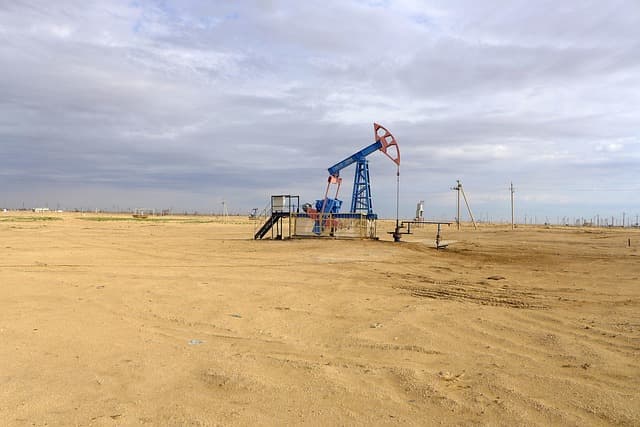
Large areas of Black Mesa land are in the process of being "reclaimed" from Peabody Western Coal Company's operations. These areas have, in most cases, not been able to sustain vegetation. Not only is this site a prime area for solar energy collection, it is also in the midst of a number of inter-state transmission lines. BMWC has been exploring the possibility of a community owned solar energy cooperative. The timeline for a plan of this magnitude will take at least four to five years. However, within the year, we are confident in being able to complete some necessary first steps.

BMWC has partnered with the Women's Earth Alliance, Dominican University's Green MBA and the Environmental Finance Center to develop a business plan for a solar energy project on reclaimed mine land at Black Mesa. The Black Mesa Solar Initiative is a model project to show how to structure a large-scale solar energy project so that all participants benefit. The initiative is a holistic approach to energy development that takes into consideration community participation and benefits, job training and environmental impact. The long-term vision of the project is to establish a solar manufacturing facility and a series of 20MW - 200MW solar photovoltaic (PV) installations on the abandoned mine land of Black Mesa. In the short-term, the project will begin with a 20MW solar PV installation that includes a community benefits agreement with a small equity ownership stake for the residents, local hire provisions and home solar PV systems for families in the area.

Increase Outreach and Education

Encompassing over 27,000 square miles in Arizona, New Mexico & Utah, the Navajo Nation is geographically the largest Native American nation in the U.S. (larger than Massachusetts, New Hampshire, & Vermont combined). In addition, with over 300,000 enrolled members, it is the second largest in American Indian population. In urban areas, the best models for energy efficiency are "block by block, community by community," but for the Navajo Nation, we're developing a "chapter by chapter" and for the Hopi Nation a "village by village" model. For rural indigenous communities that often lack basic education about the cost saving and environmental benefits of energy efficiency and renewable energy, a robust education and outreach program is critical to secure high rates of participation and lay a foundation for community-led green economic development. BMWC has prioritized three projects within our "Outreach and Education" component.

Curricula Development will be critical to helping community members better understand the process creating their own green job opportunities in collaboration with the Navajo Nation process. This information could also be used as a model for other tribes and communities.

Sustainability Fairs will showcase sustainable living practices and technologies as well as green job and community involvement opportunities opening up with the passage of the Green Jobs legislation. These fairs will feature live music, sustainability demonstrations, and a farmer's market where reservation members can bring their own harvested goods and market or trade with other farmers. In addition to showing solar and wind units, the fair would showcase demonstrations of green building practices, wool and weaving projects, water catchments and the benefits of traditional organic foods.